Keep It Clean: A Citizen's Guide to Protecting the Coast
This 53-page booklet explains the simple things people can do
in their own homes, backyards, gardens, and driveways to help
the coast no matter where they live. The guide includes alternatives
for household hazardous products and the best disposal of these
products, as well as ideas for waterfront property owners to
prevent erosion and runoff pollution.
Dive Smart: This fact sheet explains how to be an environmentally-responsible
diver.
Code of Federal Regulations (CFR) Part 151.57 requires all
oceangoing vessels 40 feet or more in length used in commerce
or equipped with a galley and berthing to have a written
waste management plan. This includes numbered and documented
recreational vessels operating seaward of the inland/international
demarcation line. All boaters may want to look at this to
evaluate things that they can do to improve clean boating!
The Master or Person in Charge of the vessel is responsible
for ensuring that a written waste management plan is on board,
and that each person handling garbage follows that plan.
The plan must describe the vessel's procedures for collecting,
processing, storing and discharging garbage, and designate the
person who is in charge of carrying out the plan. Remember,
garbage (including food wastes) may not be thrown overboard
on inland waters or in the ocean within three miles of land.
Plastics may not be thrown overboard anywhere. In addition,
33 CFR 151.59 requires that all vessels 26 feet or greater in
length have a MARPOL Annex V placard prominently displayed for
the crew and passengers regardless of whether your boat operates
on inland waters or the ocean.
Nationally, the water-quality of the lakes, streams, rivers,
estuaries, coastal waters and other waterways that we use for boating,
fishing, and swimming are important to our:
We should all be concerned about potential water-quality impacts
of our own actions and the actions of others, on the water, at the
dock, and even at home, work, or school because we all live, work,
and play downstream of potential sources of waterborne pollutants.
As boaters, we should be especially concerned with the potential
impacts of:
Polluted runoff is a major source of water pollution causing
beach closings and advisories. More than half the nation's coastal
water pollution comes from runoff. Therefore, clean boating and
environmental stewardship begins at home, even if we live far from
the nearest river. It is storm water from urban, suburban, and agricultural
land that eventually supplies the pollutants that may affect our
enjoyment of the water. For more information
click here.
The information provided here will help you to enjoy clean boating,
improve your health and safety on the water and at home, and encourage
you to take up the banner of environmental stewardship in your daily
life so that we may all enjoy the benefits of swimming, fishing
and boating on the Nation's waters.
There are many sources of
good information and many ways you can
get involved to help encourage clean boating and good environmental
stewardship.
Boating and Our Economy
Clean boating and other forms of environmental stewardship (or
the lack thereof) has the potential to affect a significant portion
of the Nation's economy. Each year billions of dollars are spent
as millions of Americans head to the water--a lake, an oceanfront,
or their favorite river--for a few days of relaxation and recreation
(U.S. Environmental Protection Agency, 2000). This money is spent
on food, lodging, and fuel, as well as special equipment, licenses,
and services, so people can enjoy themselves on and around the water.
Each year, however, closed beaches, fewer fish to catch, and other
casualties of dirty water can affect this dynamic sector of our
economy. Economic factors affected by the quality of our nations
waters include:
The population density in coastal counties is 341 people
per square mile - 4 times the national average. 50% of the U.S.
lives on the coast, which is only 11% of the country's land.
These 413 coastal counties generate $1.3 trillion (32%) of the
Gross National Product. The U.S. coast supports 34% of national
employment (over 28 million jobs). The coast supports 40% of
new commercial development and 46% of new residential development.
A third of all Americans visit coastal areas each year,
making a total of 910 million trips while spending about $44
billion. The average American spends 10 recreational days on
the coast each year. 94 million people boat and fish annually.
The travel, tourism, and recreation industries supported
jobs for more than 6.8 million people and generated annual sales
in 1996 of more than $450 billion. Water-related recreation
and tourism make for a large part of those jobs and revenue.
Almost all Americans participate in water-based recreation and
tourism and spend about 10 percent of their income on recreational
activities.
Thirty-five million American anglers, aged 16 or older,
spent $38 billion in pursuit of their sport in 1996. Fishing
expenditures increased by 37 percent between 1991 and 1996.
Over the period from 1955 to 1996, angler participation rates
increased by more than twice the rate of population growth.
If sport fishing were incorporated as a single business, it
would rank 24th on the Fortune 500 list of top sales producers,
surpassing such giants as General Motors, Exxon, Mobil, and
AT&T.
The commercial fishing and shell-fishing industries need
clean wetlands and coastal waters to stay in business. Every
year, the Great Lakes, Gulf of Mexico, and coastal areas produce
more than 10 billion pounds of fish and shellfish. The commercial
fishing industry contributes $17 billion to U.S. economy. The
seafood industry in California alone generates sales exceeding
$800 million annually, according to the California Seafood Council.
Community and business leaders also understand the potential
value of waterfront locations. Before passage of the 1972 Clean
Water Act, many of our rivers and waterfronts were so polluted
that no one wanted to go near them, much less invest in new
development. Today waterfronts are often a focal point for urban
renewal in many cities. A waterfront view is a prime selling
feature--as long as the water is clean. Ocean, lake, and riverfront
properties often sell or rent for several times the value of
similar properties located inland.
A
Money magazine survey found that clean water and clean air
are two of the most important factors Americans consider in
choosing a place to live.
The cost of polluted water is significant. Americans pay for
dirty water every year. For example:
Total economic loss to New Jersey and New York from marine
pollution in 1988 was estimated to be from $3 billion to $7.3
billion, costing 46,000 to 100,000 jobs;
A 1993 outbreak of
Cryptosporidium, a disease-causing microbe, in Milwaukee's
drinking water sickened more than 400,000 people and killed
more than 50;
The toxic microbe
Pfiesteria piscicida has killed millions of fish in North
Carolina since 1995 and tens of thousands of fish in Maryland
in 1997;
Losses to the U.S. seafood and tourism industries from Pfiesteria
are estimated at $1 billion. Maryland alone suffered $43 million
in canning and fishing losses in a single year. North Carolina
is now spending millions of dollars for watershed restoration
in an effort to control potential outbreaks in the future; and
Harmful algae blooms,
which flourish in nutrient-rich waters, have devastated the
scallop industry on Long Island, killed millions of fish in
Texas coastal bays, and sickened many who have eaten contaminated
shellfish or visited stricken seashores.
As evidenced here, clean boating and other forms of environmental
stewardship have the potential to affect a significant portion of
our economy.
Boating and
Family Health and Safety
There are a number of environmental concerns that can affect
your family's health and safety on the water. Once the basic issues
of safe boating have been addressed, the issue of clean boating
should be considered in terms of your family's health and safety.
An overwhelming majority of Americans--218 million--live within
10 miles of a polluted lake, river, stream, or coastal area. States
have identified almost 300,000 miles of rivers and streams and more
than 5 million acres of lakes that do not meet state water quality
goals. Many of these waters are not considered safe for swimming
and are unable to support healthy fish or other aquatic life.
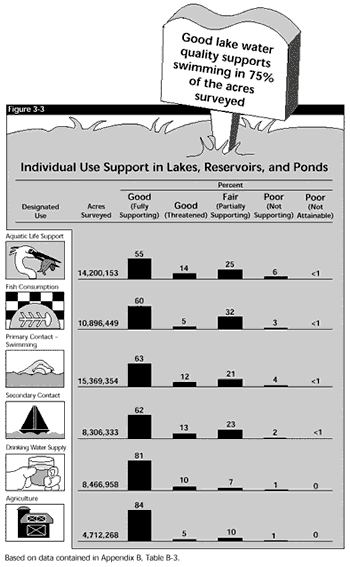
This information was compiled for the Nation's lakes, rivers,
and ponds for the
USEPA's 305(b)
Report to Congress. Each water body was only rated in terms
of the intended uses, so for example, a dirty urban stream would
not be considered as a potential drinking water or agricultural
supply. Forty-two states, one tribe, Puerto Rico, and the District
of Columbia reported individual use support status of their lakes,
reservoirs, and ponds. The reporting states and tribes rated aquatic
life use and swimming use in more lakes and identified more impacts
on aquatic life use and swimming use than the other individual uses.
These states and governments reported that fair or poor water quality
impacts aquatic life in over 4.4 million lake acres (31% of the
14.2 million acres surveyed for aquatic life support), and swimming
criteria violations impact 3.8 million lake acres (24% of the 15.4
million acres surveyed for swimming use support). Many states and
tribes did not rate fish consumption use support because they have
not codified fish consumption as a use in their standards.
There are many pollutants that are considered to be water quality
problems. Most recreational boaters do not spend enough time in
contact with the water to be concerned about many of these pollutants.
There are, however, three problems which are of particular concern
for all boaters. They are:
disease-causing microorganisms;
food poisoning from fish and shellfish by chemicals and
microorganisms; and
injury from waterborne trash.
These problems are caused by poor environmental stewardship on
land and on the water. These hazards and related problems can be
reduced and (or) avoided with proper awareness of these problems,
a little thought, clean boating/good environmental stewardship,
and some advocacy on your part.
Disease-Causing
Microorganisms
Many people do not make the connection between water-contact
and illness, so this problem goes largely unreported and unnoticed.
But, who wants to spend a day dealing with an unwanted microbiological
visitor when they could be out enjoying the water? Disease-causing
microorganisms are a real problem especially for the elderly, the
young, and those experiencing other health problems. For example:
In 1998 about one-third of the 1,062 beaches reporting to
the U.S. Environmental Protection Agency (USEPA) had at least
one health advisory or closing;
A 1995 study by the Santa Monica Bay Restoration Project
of 15,000 bathers at three Santa Monica Bay beaches found that
approximately 1 in every 25 beachgoers who swam near a flowing
storm drain contracted gastrointestinal illness or cold- and
flu-like symptoms;
Seventeen states reported 37 recreational water outbreaks
caused by microorganisms in the latest (1995-1996) available
data from the Centers for Disease Control; and
Currently EPA estimates that at least a half-million cases
of illness annually can be attributed to microbial contamination
in drinking water.
To protect your loved ones, you need to be aware of this problem,
avoid known problem areas, minimize contact with the water for 24-48
hours after each storm, and encourage clean boating techniques that
minimize discharge of sanitary waste into the Nation's waters.
Boaters can be a part
of the problem by releasing disease-causing microbes when sanitary
waste is discharged improperly. Commercial and recreational boating
play an important role in American society. Unfortunately, without
proper management, these activities can contribute to water quality
degradation. One type of degradation is the increased concentration
of fecal coliform bacteria (found in the intestinal tracts of all
warm-blooded animals). The discharge of untreated or partially treated
human wastes from vessels can contribute to high bacteria counts
and subsequent increased human health risks, and these problems
can be particularly bad in lakes, slow moving rivers, marinas and
other bodies of water with low flushing rates. Section 312 of the
Clean Water Act helps protect human health and the aquatic environment
from disease-causing microorganisms and hazardous compounds which
may be present in discharges from vessels by regulating appropriate
treatment levels for different water craft.
How do you find out where it is safe to get out of your boat
and swim? Look at the following information:
The EPA has established a webpage to disseminate
information about beach water quality,
click
here.
To get contact information for regional EPA offices, click here.
For more information about disease-causing microorganisms
click here.
Food Poisoning
From Fish and Shellfish
Boating and fishing are intertwined. Whether we are cooking up
our own catch, or enjoying a meal at the marina or a shore-side
restaurant, the long-term effects of water pollution are increasingly
being noticed by scientists, health-care professionals, and the
general public. It's not that things are getting worse in terms
of water quality; in many ways the Nation's water quality is improving.
It is just that the effects of bioaccumulation and increasing awareness
of the potential dangers have revealed food poisoning from fish
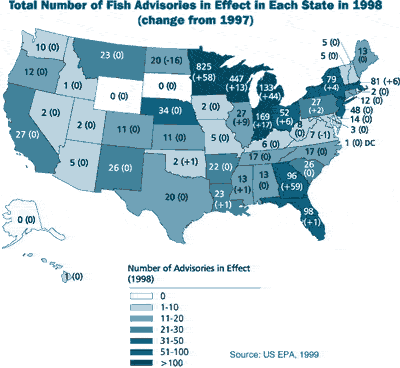
and shellfish. In 1998, 2,506 fish consumption advisories or bans
were issued in areas where fish were too contaminated to eat.
To protect your loved ones you need to be aware of this problem
and encourage clean boating techniques that minimize discharge of
pollutants into the Nation's waters. For more information about
food poisoning from fish and shellfish
click here.
Aquatic Debris Hazards
Aquatic debris is one of the more widespread pollution problems
threatening our coastal waters and other aquatic habitats. Marine
debris is trash floating on the ocean or washed up on beaches. Debris
comes from many sources including beachgoers, improper disposal
of trash on land, stormwater runoff and combined sewer overflows
to rivers and streams, ships and other vessels, and offshore oil
and gas platforms. Aquatic debris can foul or damage our propellers,
rudders, and hulls causing an unanticipated emergency. During the
late 1990s, collisions with floating debris (not including other
vessels) caused about 15 deaths, 80 injuries, and $600,000 in property
damage per year as indicated by US Coast Guard Accident Statistics.
Boaters can also be injured by stepping on trash and other debris,
which can cause injury, infection and even Tetanus. Therefore, as
a safe boater it is wise to ensure that your crew is up to date
on all immunizations and is wearing water-shoes or other appropriate
footwear when launching you boat and when swimming or wading. For
more information about aquatic debris
click here.
Boating and Our Environment
Recreational boating has increased dramatically over the past
few decades, particularly in the 1960s. The inventory of recreational
boats in the U.S. is estimated to have increased from 2.5 million
in 1960, to 7.4 million in 1970, to 8.6 million in 1980, to 11.0
million in 1990, and 11.9 million in 1996. This is a nearly fourfold
increase over the 1960 to 1996 period. All forms of water-borne
travel are responsible for a number of environmental impacts, including
air pollution, habitat disruption caused by wakes and anchors, wildlife
collisions, and releases of solid waste and sewage. The recent USEPA
(2000) Report Indicators of the Environmental Impacts of Transportation
provides a great deal of information about marine pollution as well
as pollution from other forms of transportation.
Air Pollution
Although air pollutant emissions from maritime vessels are similar
to those from other forms of transportation, there are key differences.
In particular, emissions from maritime vessels tend to occur over
different ecosystems than those from surface transportation. Lower
quantities of total emissions make the effects of vessel emissions
less pronounced than those of motor vehicles. However, emissions
have been increasing rapidly by recreational boats, which has implications
for urban air quality. Marine engines are major contributors of
hydrocarbons (HC) and oxides of nitrogen (NOx) emissions in many
areas of the country. In order to reduce air pollution from recreational
boats, the U.S. Environmental Protection Agency (EPA) is issuing
regulations that will bring forth a new generation of marine engines
featuring cleaner technology and providing better engine performance.
The Gasoline Marine Final Rule, published
in August 1996, establishes emission standards for new spark-ignition
gasoline marine engines used in personal watercraft and jet boat
applications. Controlling exhaust emissions from new gasoline spark-ignition
(SI ) marine engines is expected to result in a dramatic 75 percent
reduction in hydrocarbon (HC) emissions from these engines by the
year 2025. Historical estimates of air pollutants --including Carbon
Monoxide, Nitrogen Oxides (NOx), Volatile Organic Compounds (VOCs),
Sulfur Dioxide (SO2), and Particulate Matter (PM10 & PM2.5) from
water craft are available from the
USEPA.
Habitat Disturbance
Several environmental impacts result from the wakes of large
or high-speed maritime vessels and anchoring. Wakes from large (e.g.,
cruise ships) or fast-moving vessels can cause erosion and vegetative
and coral damage in confined or shallow waters. Wakes can cause
strong wave propagation that is capable of eroding shorelines or
stirring up bottom sediments in shallow areas. Vegetation can be
disturbed both by erosion processes and sedimentation resulting
from wakes. Sedimentation reduces the amount of sunlight available
for photosynthetic processes. Corals also are particularly susceptible
to damage from sediments that have been suspended by the action
of wakes. The impacts of wakes are local in nature and likely to
be more pronounced in confined, high traffic areas.
Fuel and Oil Spills
Releases of hazardous materials, especially petroleum products,
from vessels are one of the most publicized impacts of maritime
transportation. Many factors determine the extent of damages caused
by petroleum spills, including type of oil spilled (crude or refined),
quantity spilled, distance of release from shore, time of year,
weather conditions, water temperatures, and currents. When an oil
spill occurs, toxic hydrocarbons, such as benzene and toluene, cause
immediate wildlife deaths. Shellfish and non-migratory fish, especially
those in the larval stage, are the most susceptible to these chemicals.
Other chemicals form sticky, tar-like globs on the surface that
adhere to marine wildlife such as birds, otters, and seals, as well
as to sand, rocks, and almost all other substances. Many animals
that come into contact with such chemicals die from drowning or
loss of body heat. Heavy components of oil that sink to the bottom
of bodies of water may have the most profound impacts on ecosystems.
Such pollution can kill or damage benthic organisms and adversely
affect food webs. Oil pollution in the vicinity of shorelines can
cause ecological harm in coastal ecosystems. Humans also experience
health effects from oil spills. Exposure is dependent on how much
oil washes ashore and how much seafood is contaminated and eaten.
Some of the chemicals resulting from spills, such as benzene, are
highly toxic to humans.
Another common waste is bilge waste, which contains wastewater
mixed with oil and fuel, and is actually generated by the vessels
themselves. Refueling causes problems similar to those of auto refueling
stations. One major difference, however, is that spills can enter
waterways directly during marine refueling. Like auto refueling,
volatile organic compounds VOC can be emitted in vapors. Underground
storage tanks used to hold vessel fuels can also leak their contents
into waterways.
Trash
The three major types of shipboard solid waste are domestic garbage
(e.g., galley waste and food packaging), operational garbage (e.g.,
used fishing gear, fish processing materials, and items used for
onboard maintenance), and cargo-related garbage (e.g., packaging
materials and dunnage). While garbage generation is substantial
for U.S. maritime sectors, quantifying the amount of garbage dumped
overboard is difficult. Maritime travel is not the source of all
marine debris. Land-based sources and stationary maritime sources,
such as oil platforms, account for some portion of marine debris.
Even data on garbage generation are highly uncertain. Other factors,
such as the extremely large distances (often across international
borders) that floatable debris can travel, complicate statistics
about vessel garbage. While these uncertainties affect the accuracy
of indicators, the impacts of debris from vessels are genuine and
can be described to some extent.
The most readily observable ecological effects of solid waste
dumping from marine vessels are entanglement, ingestion, and ghost
fishing. Entanglement occurs when wildlife come into contact with
marine debris and become trapped. Affected wildlife includes mammals,
turtles, birds, fish, and land animals that inhabit coastlines.
Researchers believe that substantial numbers of animals die or are
injured because of entanglement. In fact, entanglement is thought
to be the cause of serious population declines among some species.
Non-deadly injuries can be serious, causing inability to breathe,
swim, feed, or raise young properly. To see details about estimated
trash loadings, entanglement, ingestion, and ghost fishing
click here.
In addition to ecological problems, shipboard solid wastes that
are dumped overboard can cause human health problems. These problems
are most notably associated with direct human contact with debris.
Examples of this type of problem include wounds on beaches from
sharp debris that washes up on or near shore and injuries caused
by contact with hazardous chemicals. Other human health hazards
associated with debris include diver entanglement and boat collisions
and malfunctions.
Sewage
Sewage dumping is also a problem for the marine environment.
The popularity of recreational boating in coastal areas has spurred
rapid development of marinas, many of which are not equipped to
collect and process sewage. Boaters who use these marinas often
dump sewage in the water, rather than transporting it to proper
pump-out facilities. Even in cases where marinas or ports are equipped
with sewage collection facilities, many vessels are still responsible
for sewage pollution. Some vessels do not contain a marine sanitation
device (boat toilet), and, as a result, boaters sometimes dump sewage
overboard. Some vessels are equipped with marine sanitation devices
that are meant to treat sewage and dump it in the water. If these
devices are functioning improperly, untreated sewage can be dumped.
Fees for pump-out of sewage holds on vessels also give boaters the
incentive to dump sewage illegally.
Sewage from vessels can cause serious local impacts on water
quality and human health, especially in areas of high recreational
boat use. Studies in Puget Sound, Long Island Sound, Narragansett
Bay, and Chesapeake Bay have shown that boats can be a significant
source of human wastes in coastal waters, especially where the volume
of boat traffic is high and hydrologic flushing is low. The two
major impacts of sewage discharges are introduction of microbial
pathogens into the environment and reduction in dissolved oxygen
levels. Waterborne bacteria and/or viruses that enter waterways
from vessel sewage discharges can cause serious ailments and diseases,
such as acute gastroenteritis, hepatitis, typhoid, and cholera.
Many marinas are located in or near shellfish growing areas, and
sewage dumped from the boats or at marinas has the potential to
contaminate. Pathways of exposure for humans include both direct
water contact and ingestion of contaminated seafood. Vessel sewage
has a high capacity for reducing dissolved oxygen in bodies of water.
Although the volume of wastewater discharged from vessels is typically
small, the organic substances in the wastewater are highly concentrated.
These organics can lead to low levels of dissolved oxygen where
vessel traffic is high. Even treated wastewater can have adverse
effects on the environment. Another effect of vessel sewage occurs
when treated wastewaters are discharged from vessels. These wastewaters
are treated with chemical additives, such as chlorine and formaldehyde,
which are generally toxic to marine life. For more information about
the impact of sewage
click here.
Boating and Our Future
Sustainable Development: For Today and Tomorrow
Activities that are "sustainable" can be maintained. "Development"
is business expansion or growth. Put the two together for sustainable
development and it's defined as growth or expansion that can be
maintained over decades. For coastal communities, it means using
natural resources for growth and development in a way that keeps
these resources for generations to use. In 1972, Congress created
a federal law, the Coastal Zone Management Act (CZMA), announcing
a national need to balance economic development with environmental
protection of the coast. In this way, coastal management became
an ideal vehicle for state and federal governments to practice sustainable
development. The CZMA calls citizens, industries and state governments
alike to encourage sustainable development by:
Balancing ecological, cultural, historic, and aesthetic
values with economic development;
Restoring deteriorating waterfronts and ports;
Providing greater public access to the coast;
Giving priority along the coast to industries that cannot
exist elsewhere, such as fisheries, recreation, ports and shipping;
and
Funding "special area management plans" that increase protection
of significant natural resources and allow reasonable economic
growth.
Governments are applying this concept to waterfront revitalization.
In rekindling the business aura on a waterfront, local and state
governments invite businesses into the area that take care of the
water resources. Planning committees give preference to businesses
that depend on the water for survival because these businesses aren't
likely to move elsewhere and abandon the waterfront.
The Human Factor
Without a long-term plan, growth and development can harm the
resources we need to continue growing. For example, sewage discharge
from poorly located shorefront development will contaminate bays
and cause fisheries and beaches to close; intensive private development
will eventually strain fresh drinking water sources; and coastal
storms and mudslides will destroy homes and hotels that are located
too close to the shoreline. In the end, the entire nation pays the
price of unsustainable development.
The Boater's Role
Unless boating organizations, individual boaters, marinas, and
the recreational boating industry are part of the solution they
are liable to be seen as part of the problem. While increasing laws,
regulations, management measures and other efforts have largely
benefited recreational boaters and the aquatic environment, increasing
control on boating activities may eventually limit access and drive
up costs to an unacceptable level. Therefore, the recreational boating
community should be active; not to fight the rising tide, but to
encourage clean boating and environmental stewardship at all levels.
Clean Marinas
Marinas and recreational boating are very popular uses of coastal
waters. The growth of recreational boating, along with the growth
of coastal development in general, has led to a growing awareness
of the need to protect the environmental quality of our waterways.
Because marinas are located right at the water's edge, there is
a strong potential for marina waters to become contaminated with
pollutants generated from the various activities that occur at marinas,
such as boat cleaning, fueling operations, and marine head discharge,
or from the entry of storm water runoff from parking lots and hull
maintenance and repair areas into marina basins. It seems that once
facility owners and managers take the first few steps to protect
the environment, they quickly take many other steps toward facility
improvement. And the process continues as they strive to become
even better after seeing the positive reaction of their customers
following environmental progress. All felt good that their business
activities were also better, and they have plans to continue making
headway toward cleaner marinas and clean boating.
Pollution prevention uses source reduction and environmentally
sound recycling to reduce or eliminate these impacts. Marinas can
achieve a variety of benefits including lower operating costs, improved
worker safety, and increased customer satisfaction from using pollution
prevention. In addition, the use of pollution prevention is essential
for marinas to meet the requirements of federal and state nonpoint
source pollution and storm water programs. Common marina services
can range from hull maintenance activities (including cleaning and
painting), engine maintenance and repair, fueling operations and
boater education.
Marinas Hull
Maintenance Activities
For hull maintenance activities involving paint removal, there
are a number of alternatives to the commonly used chemical strippers.
In many marina situations, these alternatives may be less toxic
and less expensive. Mechanical sanders and scrapers equipped with
vacuums are effective at removing paint in a way that prevents migration
of debris and residue. Abrasive blasting technologies utilizing
sand, plastic media, metal shot, and cryogenics are currently being
used in many industries to remove paint. In addition, high pressure
water jet stripping can be used and incorporated with technologies
to recycle the used water.
If chemical stripping agents are used, it may be possible to
substitute less toxic agents or to use a smaller volume of the present
agent. In addition, solvent strippers can be recycled using an onsite
still. There are also offsite solvent recovery services available.
Operating procedures and employee training can help ensure that
only the minimum amount of agent is used, further minimizing waste
generation.
Factors that need to be evaluated when selecting a paint-stripping
technology include hull construction, type of paint to be removed,
volume and characteristic of waste generated, and the cost of waste
disposal. Sources of additional information on these technologies
are provided at the end of this fact sheet.
Pollution prevention measures for boat painting operations include
technology changes, material substitution and good operating practices.
High volume, low pressure (HVLP) painting equipment can reduce paint
emissions as well as improve paint application and minimize cost.
Other painting technologies, such as air-assisted airless and electrostatic
application equipment, are other environmentally sound alternatives
to the conventional high pressure spray application. The proper
training and instruction of spray paint operators will further reduce
paint emissions.
Painting operations at marinas should also include the evaluation
of less toxic substitutes for antifouling paints. The purpose of
these paints is to prevent or minimize marine growth on hulls. Less
toxic alternatives are becoming more available for use on boat bottoms.
For some surfaces not immersed in water, such as boat interiors,
waste reduction can be achieved by using water-based paints in place
of solvent- based paints.
When performing hull maintenance activities, it is essential
that work areas are organized and best management practices are
set up to further eliminate or reduce the creation of pollution
at the source. This will minimize the environmental impact from
cleaning and painting activities. Painting operations, like other
hull maintenance activities, should occur in an enclosed work area.
Where practical, these activities should take place inside a building
or under a roof to minimize contaminated runoff. Containment pads
with dikes of impervious surfaces (concrete) should be installed.
These measures will reduce overspray and prevent contamination of
work area surfaces and runoff into adjacent waters.
If these areas are not available, plastic sheeting can be used
to create a temporary containment pad. A PVC hose or pipe can be
rolled up in the edges of the plastic sheeting to create a dike.
Plastic sheeting or other screening material can be used to create
an enclosed work area. These measures will prevent runoff of debris,
residuals, and other pollutants and allow for the proper segregation
and collection of waste streams.
Boat cleaning activities in the slip or dockside can also present
water quality problems. Many products used for cleaning may be harmful
to the marine environment. Less toxic substitutes such as phosphate-free
and biodegradable soaps are now readily available. In addition,
more frequent cleaning with fresh water using a soft, non-abrasive
sponge can minimize marine growth and prolong the life of hull coatings.
Aside from routine boat maintenance, it is recommended that these
activities be scheduled during the boating off-season. This allows
the boat to be removed from the water and activities to occur in
a more suitable work area location. Under no circumstances should
in-the-water hull scraping and paint removal activities be allowed.
Good housekeeping measures, such as regularly scheduled work
area inspections and yard cleanups, will also prevent the migration
of pollutants to adjacent waters. Properly designed work areas for
chemical storage will minimize the potential for spills. Storage
areas should have restricted access and provide for the containment
of spills and leaks. Drums and other containers should be in good
condition and kept securely closed when not in use.
Marinas
Engine Repair and Maintenance
Many significant problems associated with boat engine repair
and maintenance can be eliminated through pollution prevention.
Common waste streams generated from these activities include spent
engine fluids, batteries, worn metal parts, and waste solvents.
Marina operators have a number of options available to reduce or
recycle these waste streams.
Proper management of spent engine fluids, such as waste oil and
used anti-freeze, will prevent these materials from contaminating
nearby surface waters. Individual waste streams should be collected
in separate containers and segregated from other waste streams including
trash and debris. These measures will reduce the volume of waste
to be managed and improve the recycling capability of the waste
streams. Marinas working together can implement a recycling program
for their area using an outside service.
Waste solvents from parts-cleaning operations can be recovered
by using an onsite distillation unit. In addition, there are offsite
solvent recovery services available to the marina operator. Hazardous
wastes from solvent cleaning operations can be completely eliminated
by switching to an alternative cleaning method such as an aqueous
cleaning system. Citrus- based cleaners are also an effective substitute.
Worn parts and scrap metal can be sold to a parts remanufacturer
or metal recycler. Batteries can also be recycled along with non-hazardous
waste such as cardboard, plastic and aluminum.
Proper housekeeping and spill control methods will help eliminate
spillage of engine fluids and solvents. Drip pans can be used for
product recovery and to prevent loss or runoff. Equipment is available
for product transfer from drums to further prevent spills from occurring.
Marinas and
Fuel Station Activities
Fueling operations are a common source of water pollution due
to overfills and spills. Marinas can prevent such incidents and
prepare for spills by developing a spill prevention plan. The plan
should address proper procedures and maintenance of fuel station
equipment. In addition, supplies and equipment for spill response
should be identified. Booms and other sorbent materials should be
immediately available and easily deployable. The plan will also
help minimize environmental impact in the event of a spill.
Fuel pump nozzles should be equipped with automatic back pressure
shut-off to prevent overfilling the fuel tank. Fuel nozzles should
not be equipped with a clip designed to keep the nozzle open during
refueling activities. Also, the use of fuel/air separators on fuel
tank vents will further prevent fuel overflows from occurring. Marinas
can make these devices available and promote the their use to boat
owners.
Fuel storage tanks should be properly designed and periodically
tested to check the integrity of the system. Storage systems should
have secondary containment. Overflow alarms on tanks can further
reduce the chances of a spill occurring. Accurate fuel storage record
keeping can be used to verify that fuel is not being lost through
leakage.
Marinas and Boater
Education
Marinas can further enhance the quality of the environment by
educating boaters on proper waste minimization. A well-operated
marina with an established pollution prevention program will set
a positive example for boaters, resulting in increased environmental
protection. Marinas can provide resources and establish activities
in several different areas to educate boaters and prevent pollution.
It is essential that marinas provide recycling facilities for
all types of solid waste such as plastic, glass, aluminum, and paper.
Marinas should encourage boaters to use recyclable products to reduce
the solid waste impact on the environment. Specially designated
recycling areas should be conveniently located and easily identifiable
for boater use.
Marinas should also designate areas for boat maintenance and
repair. These areas should be well maintained and include covered
receptacles for non- recyclable solid wastes. Storm drains located
throughout the marina area should be clearly identified to prevent
the dumping of waste materials. In addition, marinas can provide
recycling of waste oil and antifreeze from these activities.
As a further service to boaters, information on county household
hazardous waste collection events can be provided by marinas.
For marinas that offer fishing charter services, an area should
be established for cleaning fish. Sound fish waste management practices,
including the proper disposal of fish waste, should be established.
Marinas may also be able to a implement a fish composting program.
Marinas can establish policies prohibiting certain activities
that threaten the marine environment. These policies can be established
in a lease or contract with boaters. These policies can address
proper boat maintenance procedures and waste recycling and disposal.
Newsletters, notices in monthly bills, postings and informal
visits with boaters can further promote the benefits of pollution
prevention. Topics such as proper disposal of marine sanitation
devices (MSD), less toxic hull maintenance materials, and recycling
will continue to remind boaters about environmental protection.
Inexpensive awards, prizes or other recognition can be established
for outstanding efforts made by boaters.
Boaters who are aware of the positive effects that clean boating
and environmental stewardship can have can make a difference by
rewarding clean marinas and clean manufacturers with your business,
by obtaining and sharing relevant information and by getting involved
in the process.
For more information about clean marinas
click here.
How to Be a Clean Boater
The small, extra efforts and expenses required to practice clean
boating and good environmental stewardship make sense economically,
for our family's health and safety, for the environment, and for
the future of recreational boating. Clean Boating includes all aspects
of boat maintenance, operation, and housekeeping. Care must be taken
during cleaning, sanding, painting, fueling, motoring, pumpout,
and trash disposal to minimize potential effects on the aquatic
environment. Here are a few considerations for the clean boater.
For more information
click here.
Cleaning Your Boat:
When washing a boat's deck and hull surface, people often use
products that contain toxic ingredients such as chlorine, phosphates
and ammonia. Just as these chemicals act as degreasers on the boat,
they also act as degreasers on fish -- drying the natural oil fish
need for their gills to take in oxygen. To reduce your need for
toxic products, follow these tips:
Rinse your boat only with fresh water after each use. This
will reduce your need for cleansers and heavy-duty products.
Use old-fashioned cleaning methods, including baking soda,
vinegar, lemon juice, borax and "elbow grease".
Sanding Your Boat:
Sanding and scraping your boat can release noxious paint and
varnish particles into the air and water around you. Always sand
and scrape on shore, away from the water and preferably in a dedicated
work area. Use a vacuum sander, a tool that collects and stores
the dust before it can get into the water or into your eyes and
lungs!
Painting Your Boat:
To reduce organism growth, many boat owners apply anti-fouling
paints to the boat bottom. However, most of these paints contain
toxic metals such as copper, mercury, arsenic or tributyltin (TBT).
All have severe impacts on human health and the underwater ecosystem;
the use of some, such as TBT, has even been banned by federal law.
To learn more about laws regulating bottom paints, as well as alternative
painting products, contact your state boating agency and your local
marine supply store.
Fueling and Bildge
Maintenance:
Take precautions not to overfill your fuel tank. If you overflow
onto the boat or dock, wipe up the spill with a rag; do not hose
it into the water. If you do spill fuel or oil into the water, do
not disperse it with detergent or soap! That only sends the problem
down to the seafloor where it becomes more toxic and more difficult
to clean up. If the spill is large or if it discolors the surface
of the water, you must report it to the National Response Center
at 1-800-424-8802 or to the U.S. Coast Guard on VHF channels 16.
Failure to do so is illegal and can cost you civil penalties and/or
criminal sanctions.
Clean Motoring:
If you become grounded, do not attempt to motor your way out.
This could cause serious damage not only to your motor and propellers,
but also to the seafloor and local marine organisms. If you sight
a marine mammal such as a manatee, dolphin or whale, slow down and
keep a safe distance of at least 100 yards. It is illegal to feed,
harass, molest or injure a marine mammal.
Pumpouts:
Just like lawn fertilizers and manure, human waste contains nutrients
that can unnaturally stimulate algae growth and deplete the amount
of oxygen in the water. Although it is also a repulsive visual pollutant,
our primary concern about sewage in the water is its potential for
carrying disease-causing pathogens to swimmers and shellfish.
Waterborne illnesses attributed to sewage pollution include hepatitis,
typhoid, cholera, and gastroenteritis. The indicators used to detect
the presence of sewage pollution are not the pathogens themselves,
but rather a type of bacteria called fecal coliform bacteria. Fecal
coliform found in water is an indicator of the presence of human
waste and the potential harm for disease. When fecal coliform levels
exceed designated public health thresholds, swimming beaches and
shellfish beds may be closed, which can hurt tourism and deteriorate
the quality of life for all of us.
Untreated sewage and other nutrient loading in a water body can
come from various land-based sources including faulty residential,
municipal, or marina septic treatment systems, poor farming management
practices, or direct discharges from shoreside facilities and boats.
Consequently, discharge of raw sewage from a vessel within the
three nautical mile limit of U.S. territorial waters is illegal.
(The Chesapeake Bay and Puget Sound are considered to be within
the three-mile limit). For boaters, this means that any direct flow-thru
systems must be secured while a vessel is navigating inland waters
or within three miles of shore.
Clean Trash Discharge:
Stow all loose items, plastic bags, drink cans, and other articles
properly so they do not blow overboard. Never discard your garbage
overboard. Whatever you take aboard, bring back. Under the Marine
Plastic Pollution Research and Control Act, and the international
agreement MARPOL Annex V, it is illegal to dispose of plastic, or
garbage mixed with plastic, into any U.S. waters. The discharge
of any garbage is prohibited in the Great Lakes and connecting tributary
waters.
Other Sources of Pollution
Polluted runoff is a major source of water pollution causing
beach closings and advisories. More than half the nation's coastal
water pollution comes from runoff. Therefore, clean boating and
environmental stewardship begins at home, even if we live far from
the nearest river. It is storm water from urban, suburban, and agricultural
land that eventually supplies the pollutants that may affect our
enjoyment of the water. For more information
click here.